

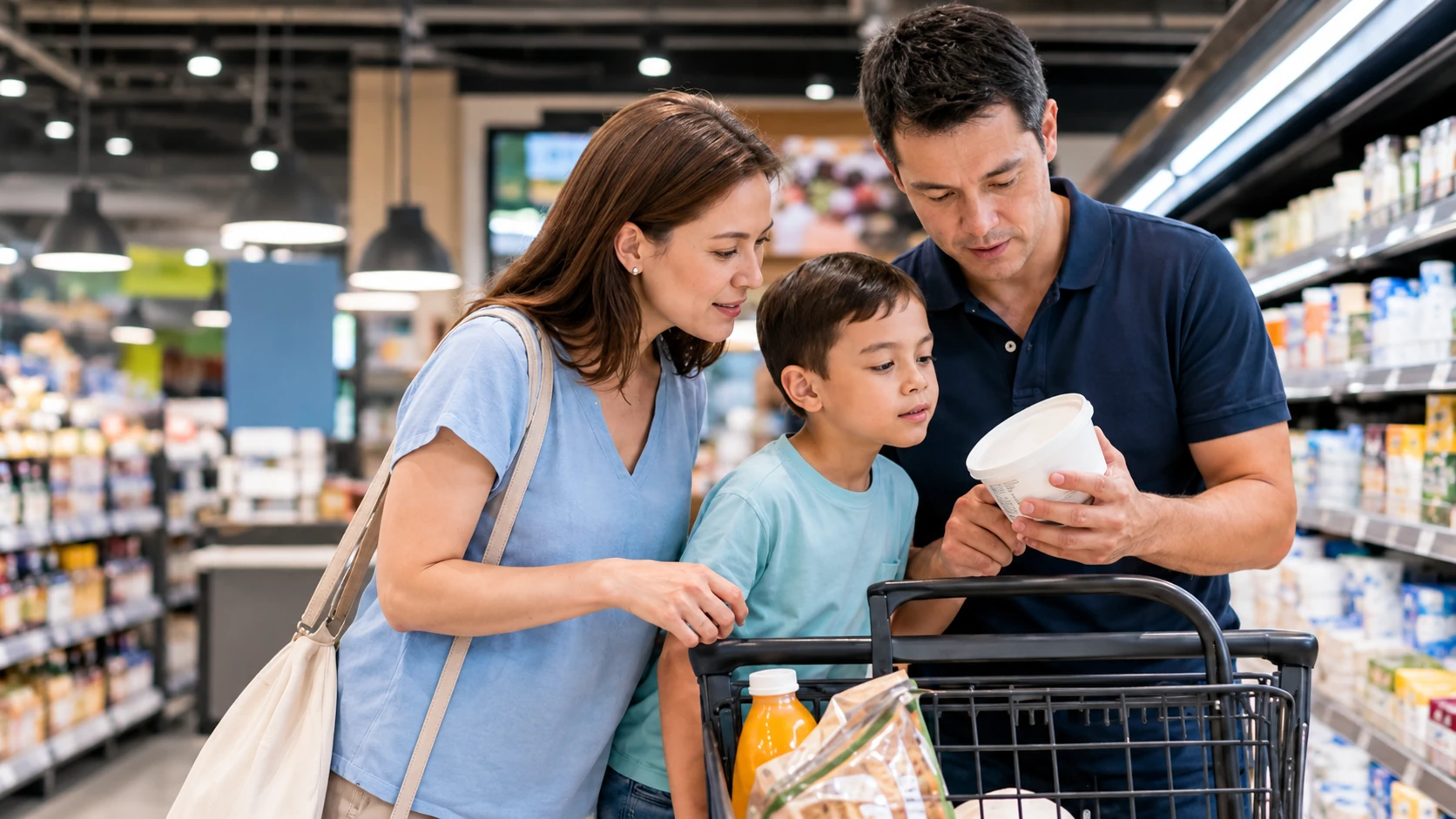
You’re at the supermarket, reaching for the crackers your child always eats. The packet looks familiar, and you’re about to drop it into the trolley. Do you really need to read the label again?
It’s worth taking a moment to turn it over. Recipes and manufacturing processes can change even when the packaging looks the same. Checking the food label each time you shop helps you spot a change in a familiar snack.
Would you spot milk in these crackers?
You might expect to see the word milk. But in the ingredient list on a packet of crackers, the clue could be butter. On another snack, it might be whey or casein. The brackets can be helpful too. If the label says miso powder (soya beans, salt), that’s where you’ll spot the soy.
A “Contains milk” statement makes it easier to spot milk at a glance. It’s a useful double-check after you’ve read the ingredients, since a separate “Contains” statement is optional. And if your child has a sesame allergy, the ingredient list is especially important. Sesame is outside Singapore’s mandatory allergen declaration list, so look for names such as sesame seeds, sesame oil or tahini.
What does “may contain” mean on a food label?
Imagine you’ve read the ingredients and there are no peanuts listed. Then you spot “May contain peanuts” underneath. That warning is about possible contact with peanuts during manufacturing or handling, for example on shared equipment. You might see a similar warning on another pack that says it was made in a facility that also processes peanuts. Neither phrase tells you how likely it is that peanuts are present. These warnings are voluntary, so a pack without one can still carry a risk of cross-contact.
If a warning names your child’s allergen, follow the advice from your child’s allergist. If you’re unsure about that particular snack, you can put it back for now and ask the manufacturer or importer for more information.
What if the food label is missing or unclear?
This often comes up with little snacks from a multipack. The individual wrapper may have very little information, so check the outer box. For snacks brought back from overseas, bear in mind that labelling rules vary and translations can miss details. If you still can’t confirm what’s in the snack, set it aside and offer something you’ve already checked.
The next time you’re unpacking groceries, hand your child a familiar packet and see if they can find the ingredients and any allergy statements with you. It’s a small way to help them get comfortable with a habit they’ll eventually use on their own.
Download the Reading Food Labels infographic (PDF) from Patient Resources for a one-page guide you can share with grandparents and other caregivers.
Learn more about management of food allergy at our clinic.
