

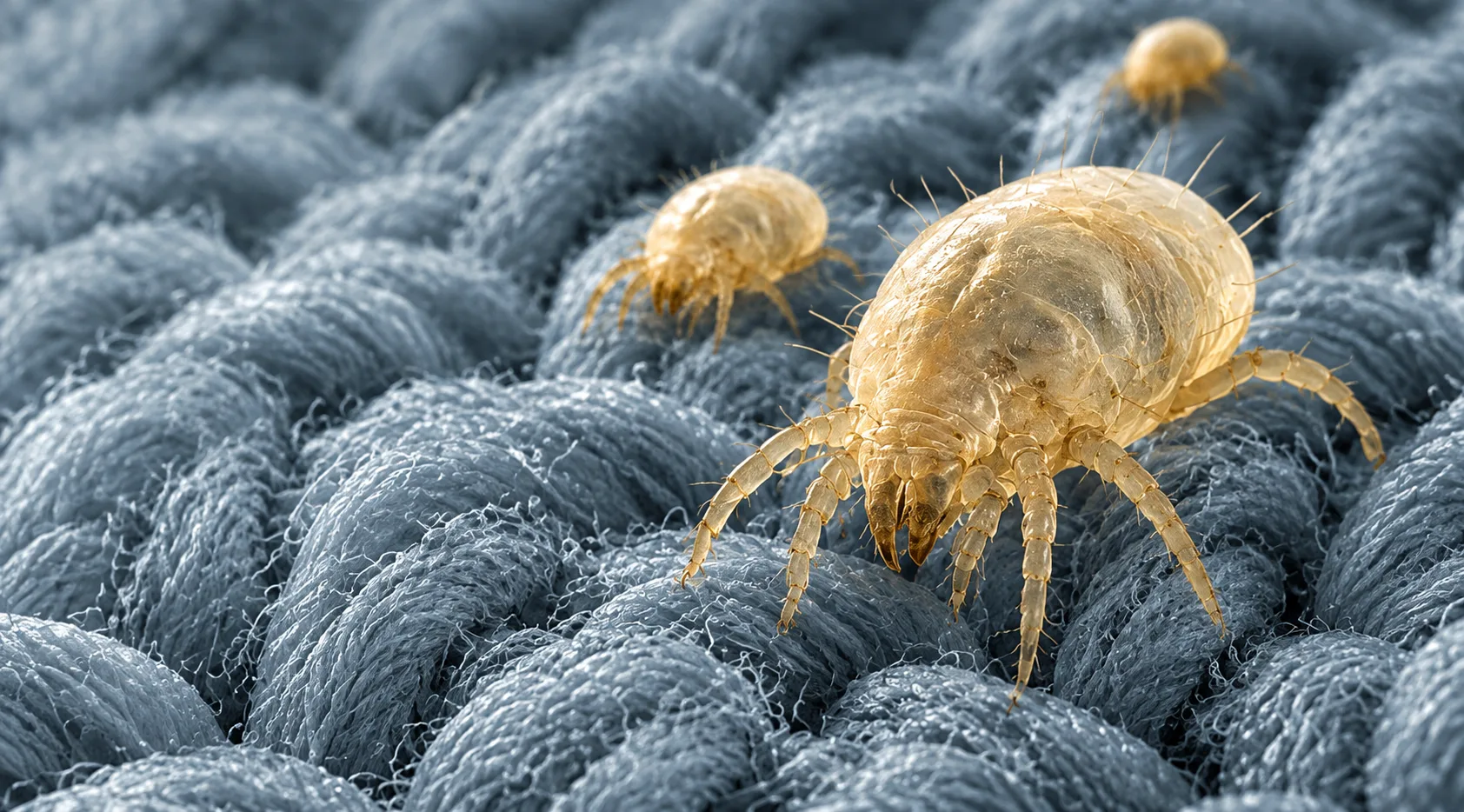
Your child has been diagnosed with a house dust mite allergy. That evening, you find yourself looking at mattress covers, air purifiers and a new vacuum cleaner. What’s worth buying, and what can you change at home this weekend? Start with the bed.
Start with one change you can keep up
The bed is a practical place to start because your child spends hours there every night. Wash bedsheets and pillowcases once a week at 60°C. If weekends are when you usually do the laundry, make bedding part of that routine. Keep all stuffed toys off the bed.
Is a dust mite mattress cover worth buying?
If you decide to buy one, look for a cover that zips around the whole mattress. A fully enclosed cover can reduce exposure to dust mite allergens in the mattress, but a cover on its own is unlikely to make much difference to your child’s allergic rhinitis symptoms.
Will an air purifier help with dust mite allergy?
An air purifier on its own is unlikely to help much with dust mite allergy. Most dust mite allergens tend to collect in bedding, soft furnishings and settled dust. If you’re deciding where to start, focus on your child’s bedding. A HEPA air purifier can help during haze by filtering fine particles from the air indoors.
What if my child still wakes up with a blocked nose?
Is your child still waking up congested most mornings? Is a blocked nose interrupting their sleep? Bring those details to your next appointment. If symptoms are still getting in the way, it’s worth reviewing their allergic rhinitis treatment with their doctor before spending more on changes around the home.
For the full list of changes you can make at home, see our Allergic Rhinitis page. You can also download the Reducing House Dust Mite Exposure at Home leaflet (PDF) to share with grandparents and other caregivers.
