Eczema

Eczema, also called atopic dermatitis, is a common skin condition in children. It causes dry, itchy and inflamed skin that can improve and flare again over time.

Eczema (Atopic Dermatitis) in Children

Eczema, also called atopic dermatitis, is a common skin condition in children. It causes dry, itchy and inflamed skin that can improve and flare again over time.

With consistent skin care and the right treatment plan, eczema can usually be controlled well. Many children also improve as they grow older.

What Does Eczema Look Like?

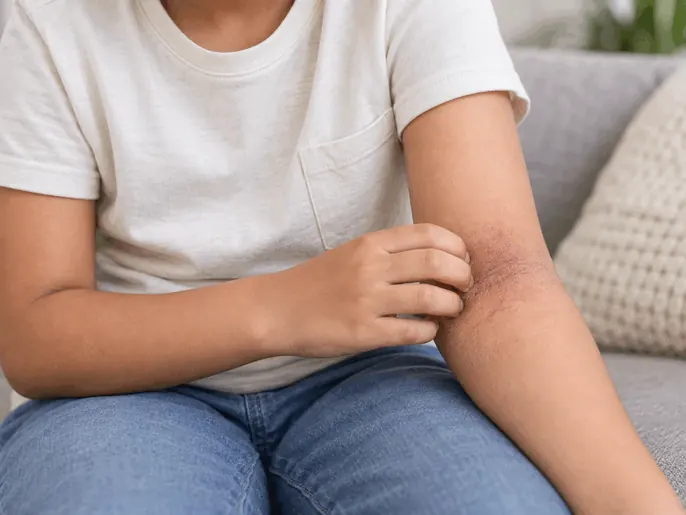
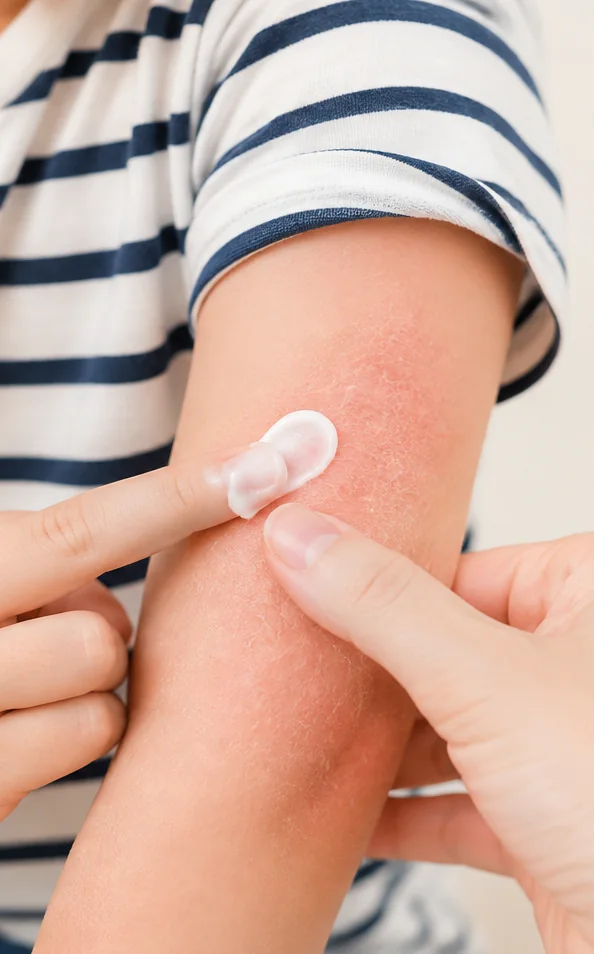
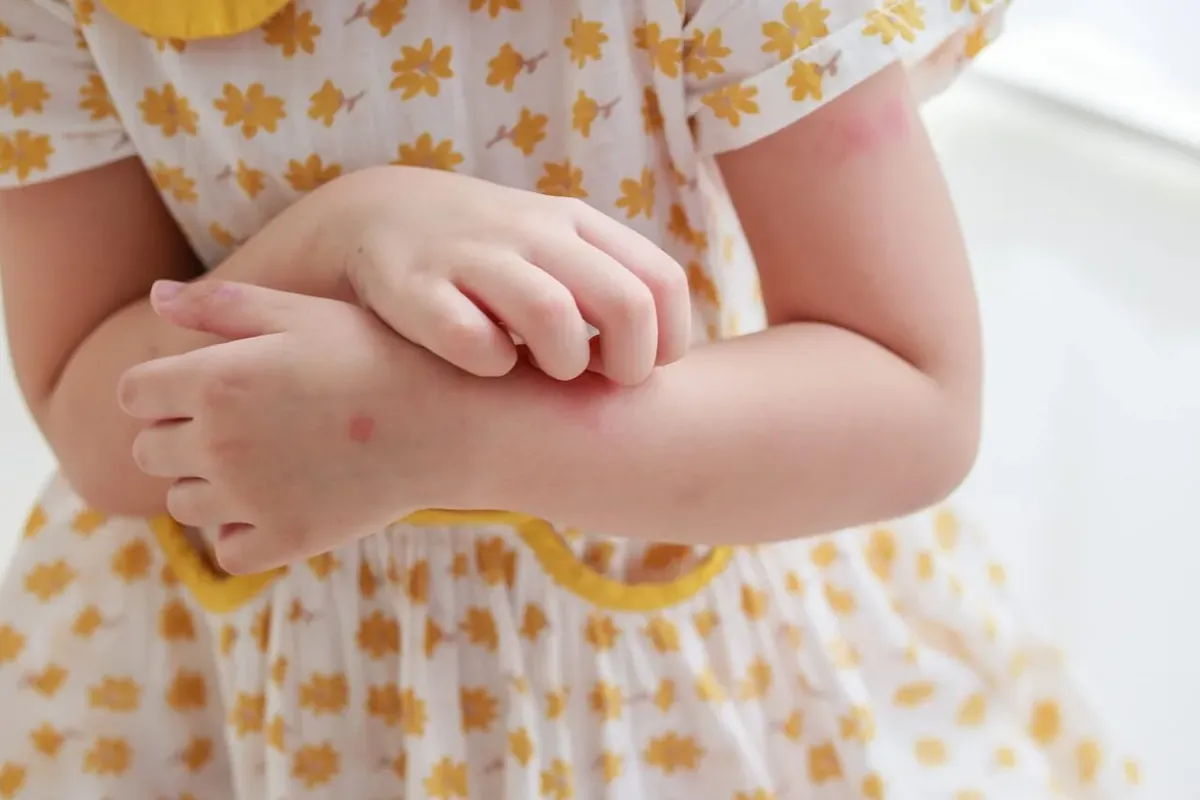
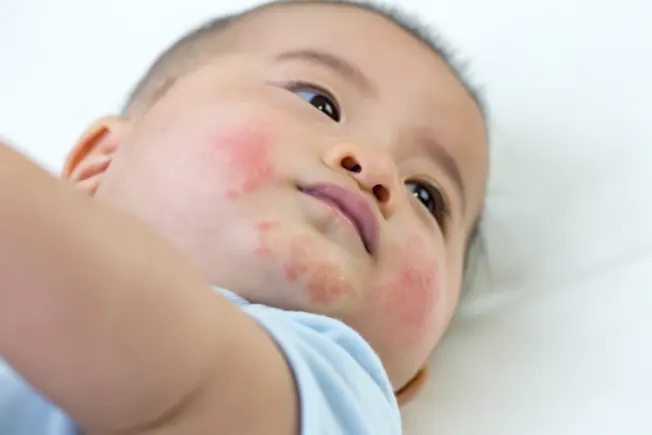
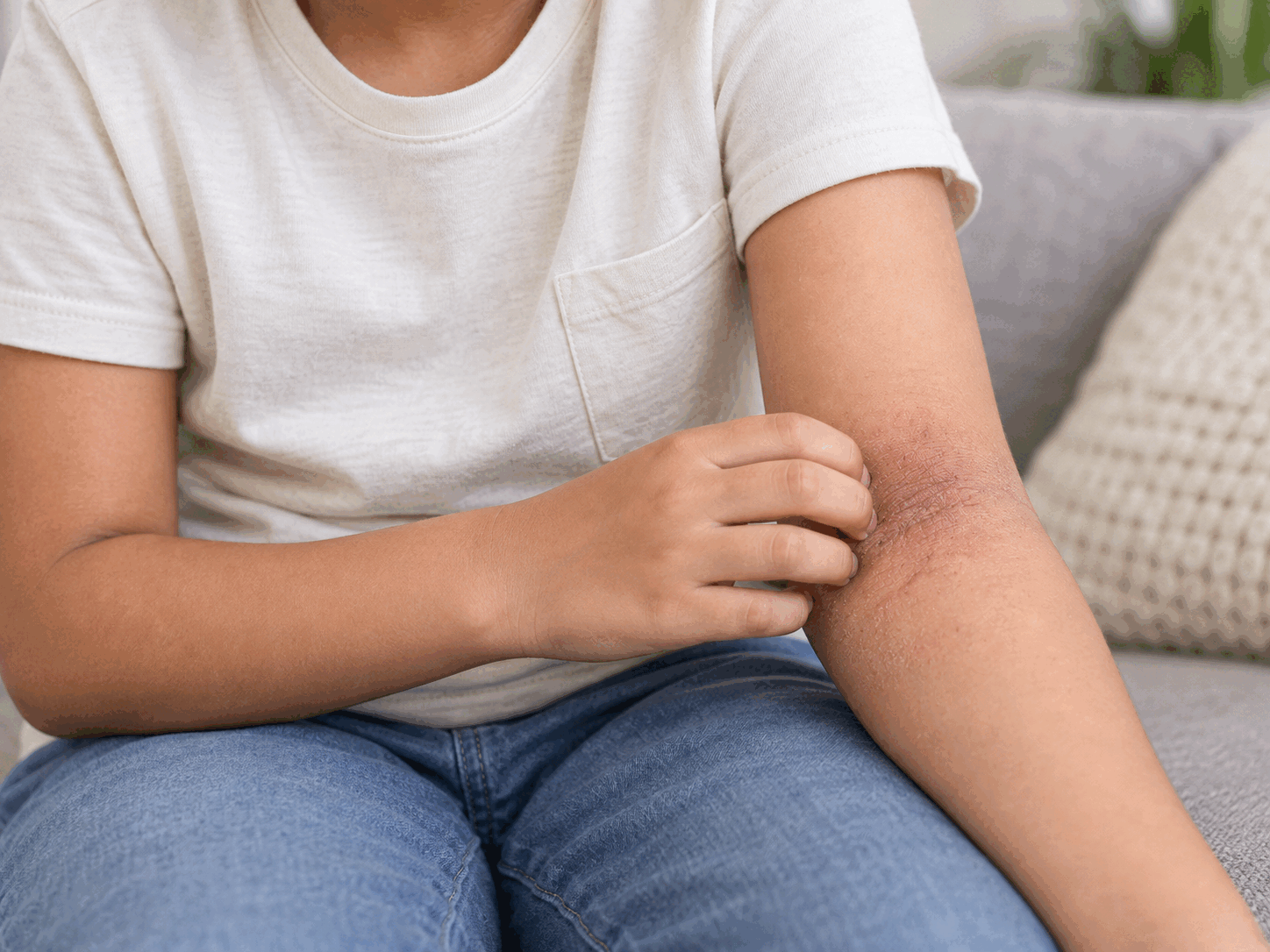
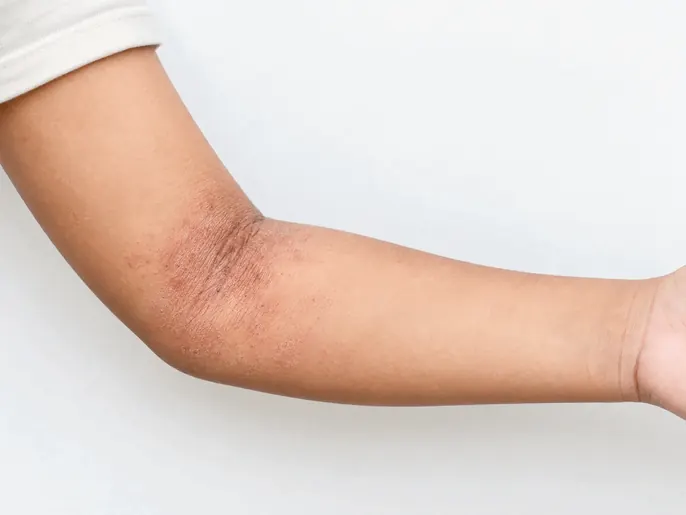
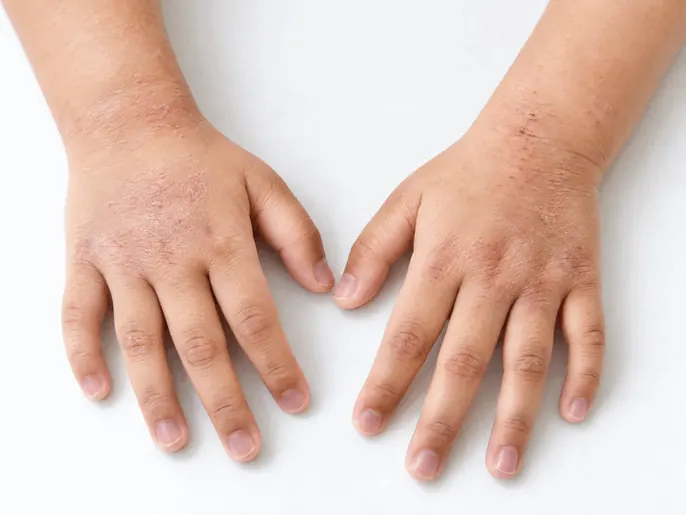
Eczema may appear as dry, red, rough, scaly or scratched patches. During a flare, the skin can become bumpy, blistered or weepy. Repeated scratching may eventually make it thicker

In babies, eczema commonly affects the scalp and face. In older children, it often appears around the neck, inside the elbows and behind the knees. More severe eczema may affect larger areas of the body.

Babies Commonly effects the scalp and face
Older Children Often appears around the neck, inside the elbows and behind the knees

Why does my child have eczema?

Children with eczema have an underlying tendency towards a weaker skin barrier and an overactive skin immune response. Genetics, family history and early-life development of the skin and immune system all play a part.

This tendency is not something parents caused or could necessarily have prevented. It also cannot usually be removed by identifying and avoiding a single allergen.
What makes existing eczema flare?

A trigger does not cause the underlying eczema. It irritates eczema-prone skin or makes an existing rash worse.

Common triggers include:

  • Heat and sweating
  • Changes in weather
  • Dry skin
  • Strong soaps, detergents and bubble baths
  • Cigarette smoke
  • Dusty environments and house dust mites
  • Viral illnesses and skin infections
  • Insect bites
  • Stress and scratching

Is Eczema Caused by Food Allergy?

In Singapore, eczema affects about 20% of children, while true food allergy affects fewer than 5%. Children with eczema have a higher chance of developing a food allergy than children without eczema, but this does not mean that food allergy caused their eczema.

Do not restrict foods without advice Do not remove milk, egg, wheat, soy, nuts or other important foods from your child’s diet without medical advice. Unnecessary food restriction can affect nutrition and growth.
Speak to your doctor Speak with your doctor if your child develops symptoms soon after eating a particular food, such as hives, swelling, vomiting, coughing, wheezing or breathing difficulty.

Caring for Eczema

Moisturise frequently

The main everyday problem in eczema is dry skin. Moisturising is therefore the foundation of eczema care.

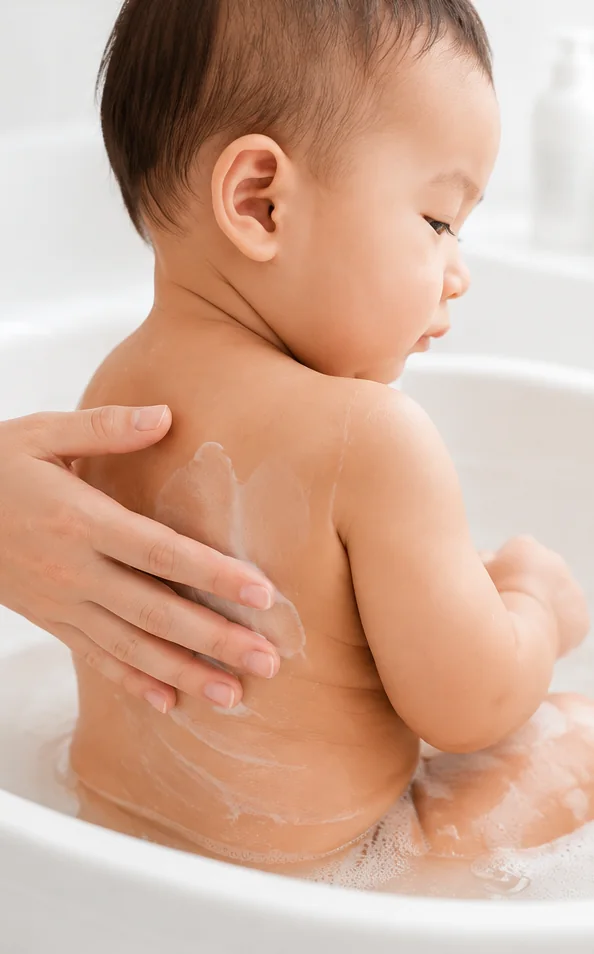
Apply a fragrance-free moisturiser generously over the whole body at least three to four times a day, including on skin that looks normal. 

Short baths or showers in lukewarm water, gentle soap substitutes and avoiding strongly fragranced products can also reduce irritation

When Should Your Child See a Doctor?

Arrange a medical review if:

The diagnosis is uncertain

The eczema is persistent, worsening or disturbing sleep

The skin is painful, weepy, crusted or possibly infected

You are concerned about a food allergy

You are unsure which creams to use or how to use them

Your child’s current treatment plan is not controlling the eczema

We can assess your child’s skin, address possible triggers and create a practical eczema care plan for your family.

Get in Touch

We're sorry, appointment bookings are not available just yet. Please contact us with any questions—we'd be happy to help.

Email : contact@kwchongallergy.com